The following examples show how Melchor, Morao, Cepero, Parrilla and Rafael Alarcón have used different combinations of golpes, slurs and index-finger strokes to maintain a basic bulerías rhythm. Frequently, the index is flicked by pressing it against the thumb. Matching these ideas (call and response) with different rasgueados and cierres will give you a lot of material for bulerías without even playing falsetas. You should learn a few rasgueados before starting with these ideas.
Melchor slow and fast Some elements of Jerez-style bulerías are observed in the playing of Melchor de Marchena. Notice that. at beat 1, he is already holding the B-flat chord. In this example, it would almost make more sense to start with the second compás and continue with the first.

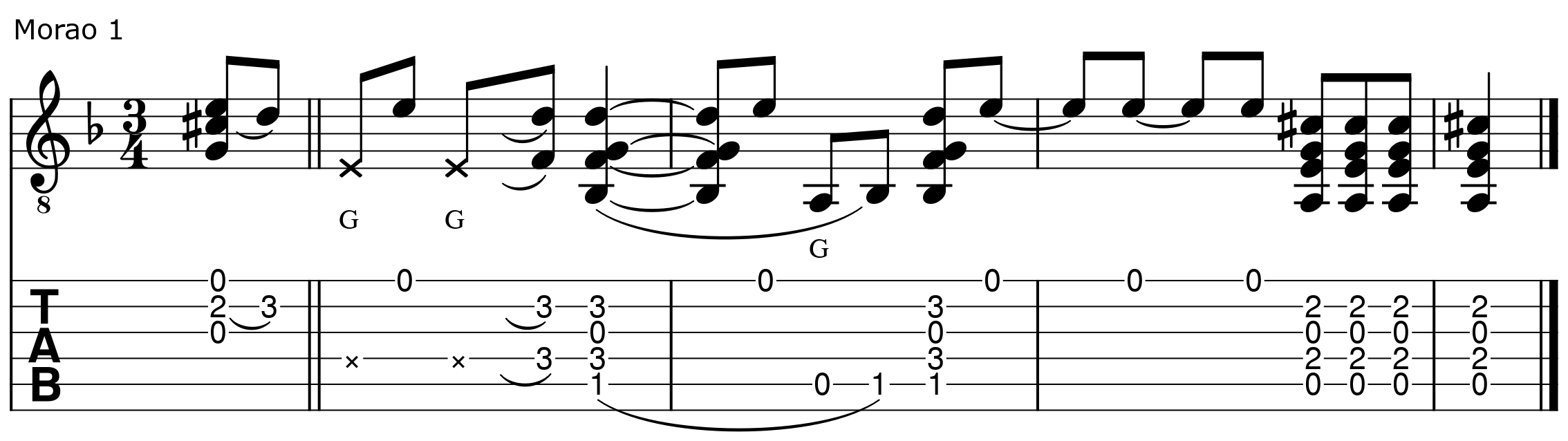
Morao 1 slow and fast. Manuel Morao is the cornerstone of Jerez-style guitar. It is said that he and Terremoto practically defined bulerías as we know the style today.
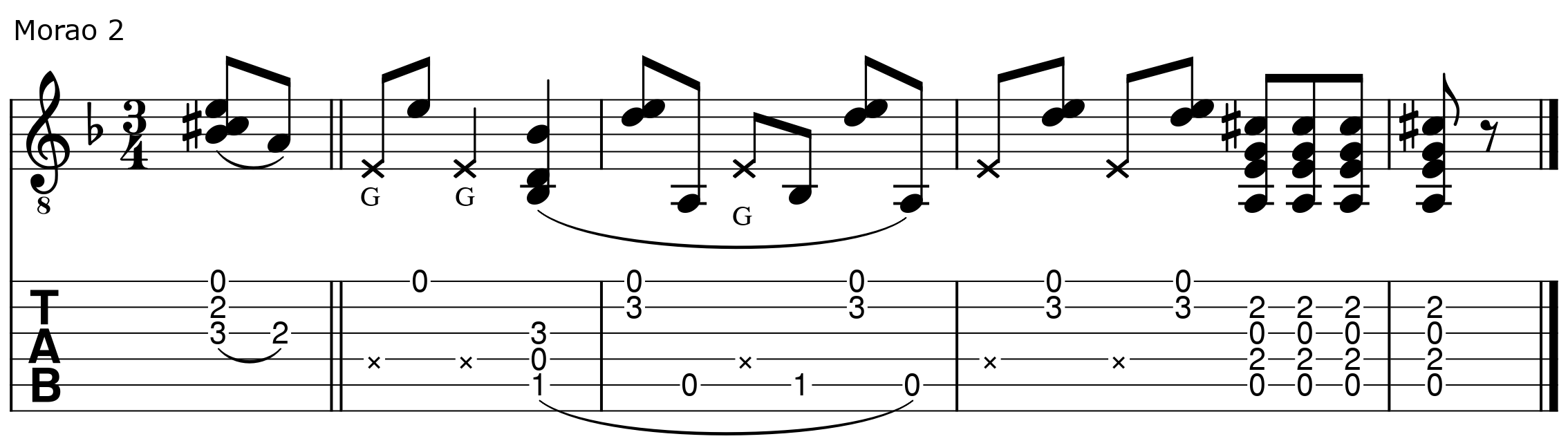
Morao 2 slow and fast. The highly dynamic nature of the examples Morao 2-4 makes them ideal for use as response phrases. Morao 2 is a variation on the preceding idea. Although the tap and slur at the fifth beat are virtually the same, the result is very different. Notice that the B-flat chord is different from that of the preceding example.
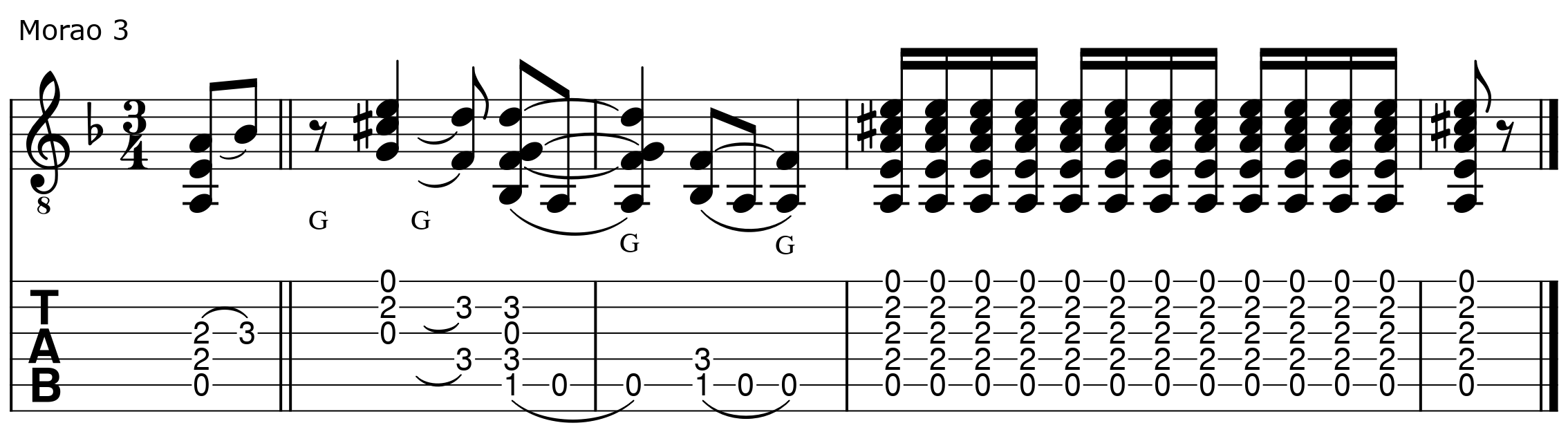
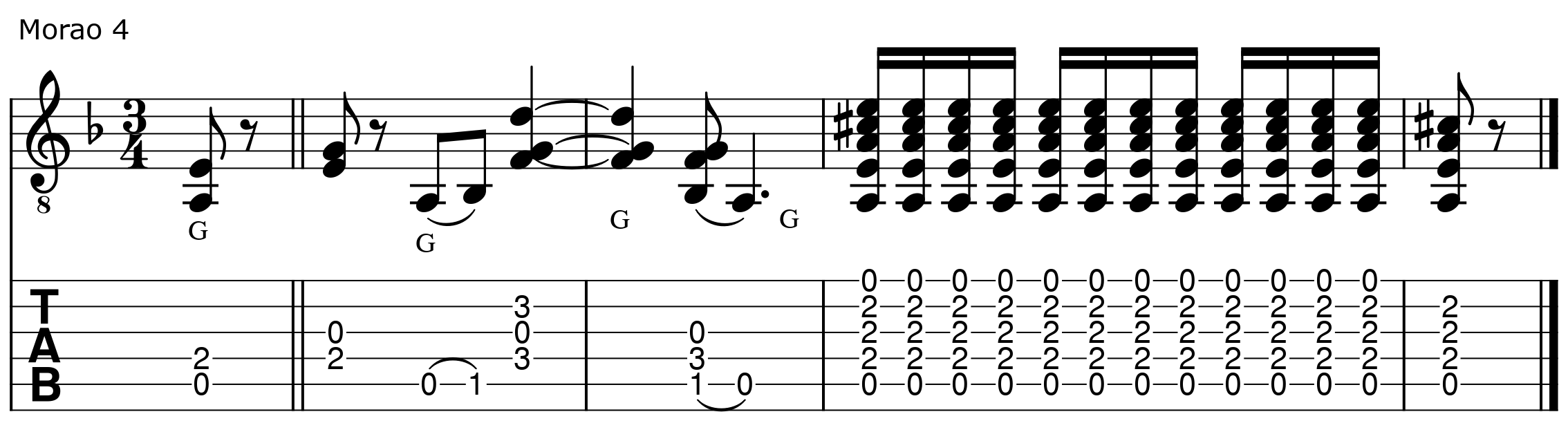
Morao 3 slow and fast. Morao 3 and 4 are examples of his tendency to tap on the even-numbered beats.
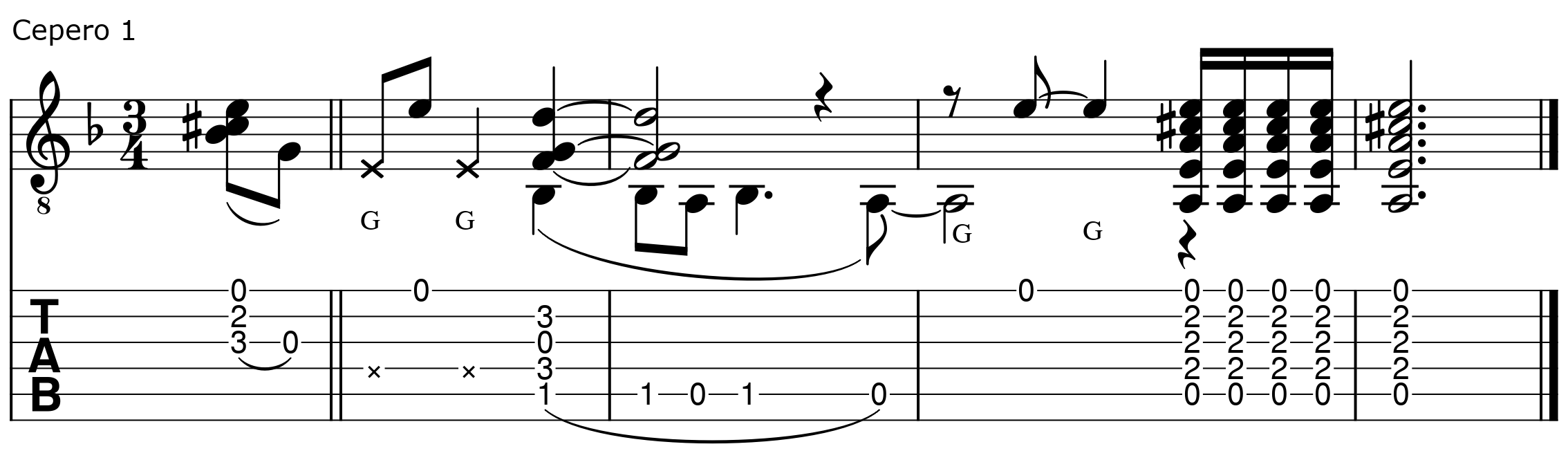
Cepero 1 slow and fast. Paco Cepero has developed his own brilliant style, although he was greatly influenced by the playing of Melchor and Morao in his early years. In Cepero 1, the fifth-string slur is not as complicated as it might seem. If you tap your foot on the even-numbered beats, the last slur takes place just after beat 6. This example is comparable to Melchor and Morao 1. For a more detailed explanation of examples Cepero 1 and 2 and the falseta played between them, click here.
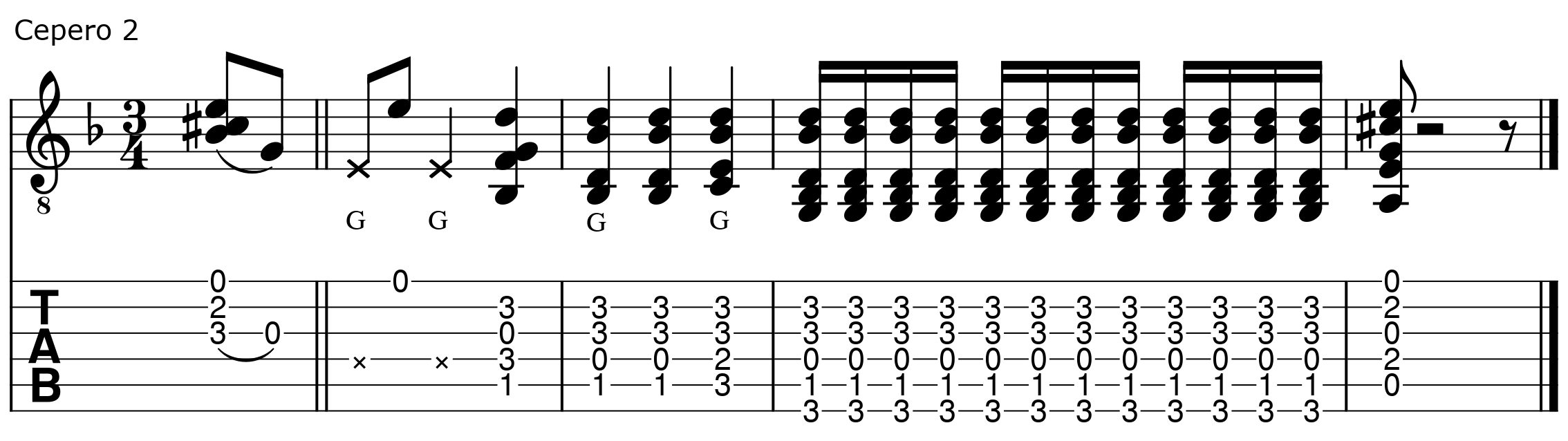
Cepero 2 slow and fast. Cepero 2 is from the same recording as the preceding example. This idea and Cepero 4 can be used as response phrases. Notice that he uses two types of B-flat chord.
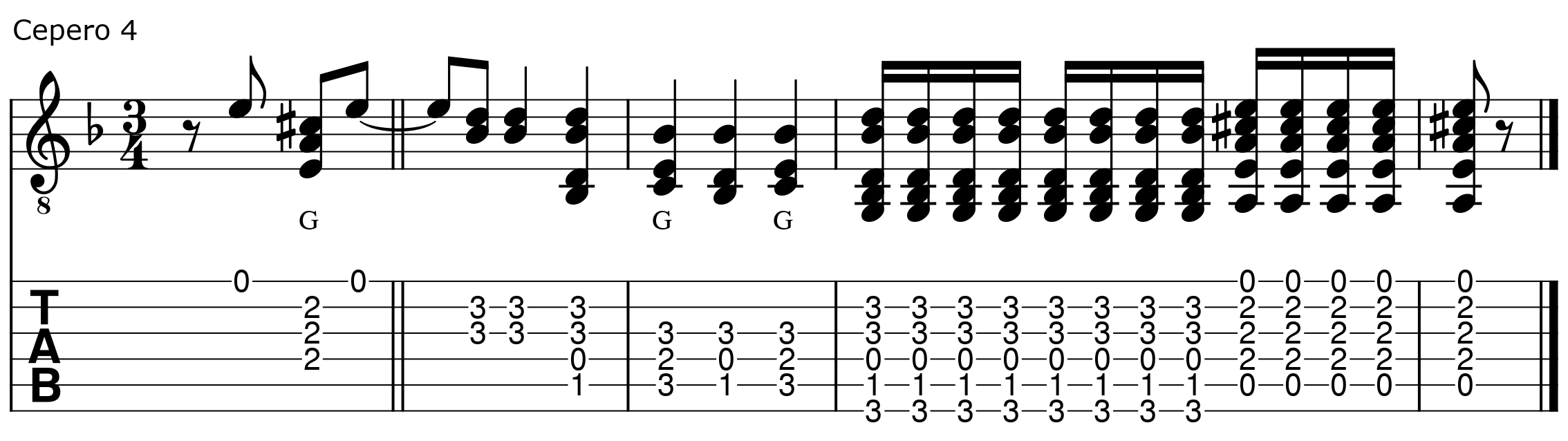
Cepero 3 slow and fast. Examples Cepero 3 and 4 involve a denser rhythmic context.

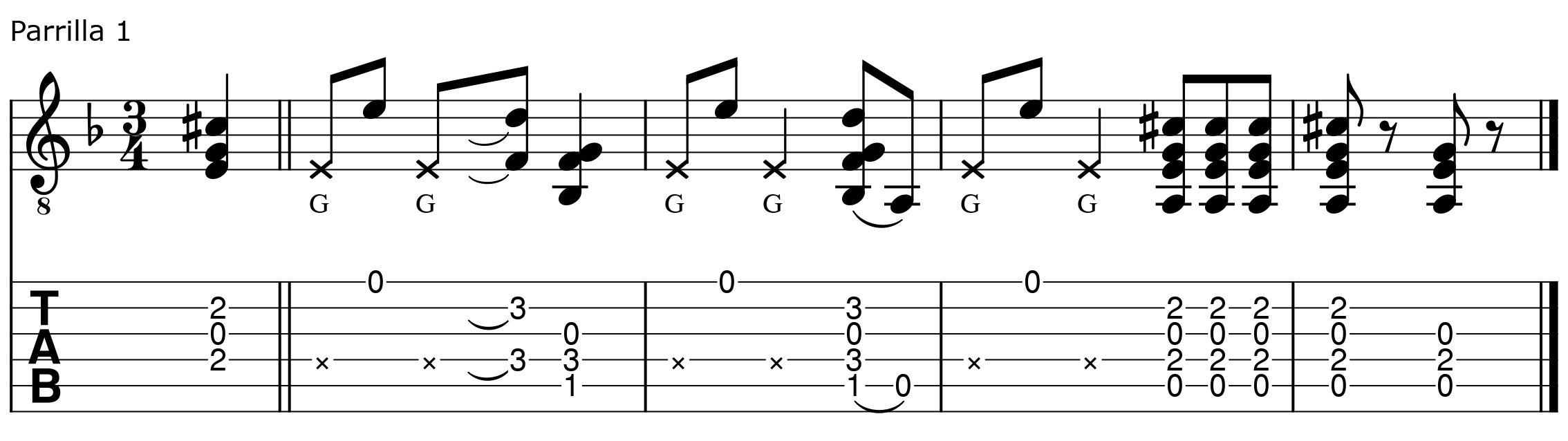
Parrilla 1 slow and fast. Many aficionados feel that Manuel Parrilla was the all-time best at accompanying bulerías. In the following examples, he plays the same ideas seen above and often taps on beats 4-5 and 7-8. In Parrilla 1-3 he starts the cierre on beat 6.
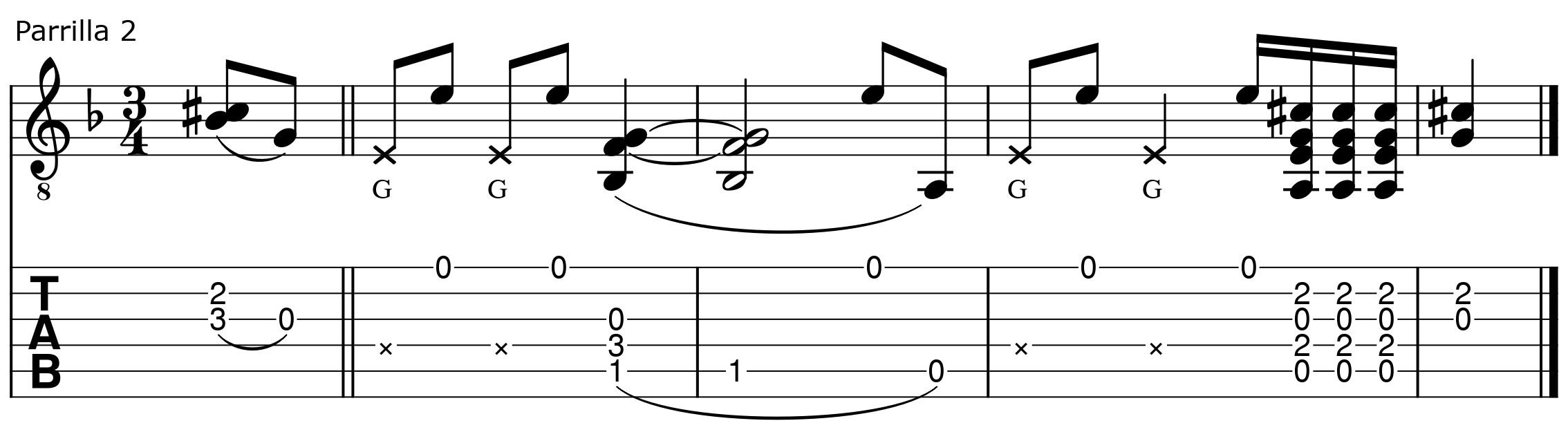
Parrilla 2 slow and fast. In Parrilla 2, he plays the open first string twice before the B-flat chord at beat 3, which rings out until beat 6. The rasgueado at the end is fingered i-a-m-i-i, starting and ending with an index upstroke. The first upstroke should fall squarely on beat 9 and not a moment earlier, so pay close attention to this detail.
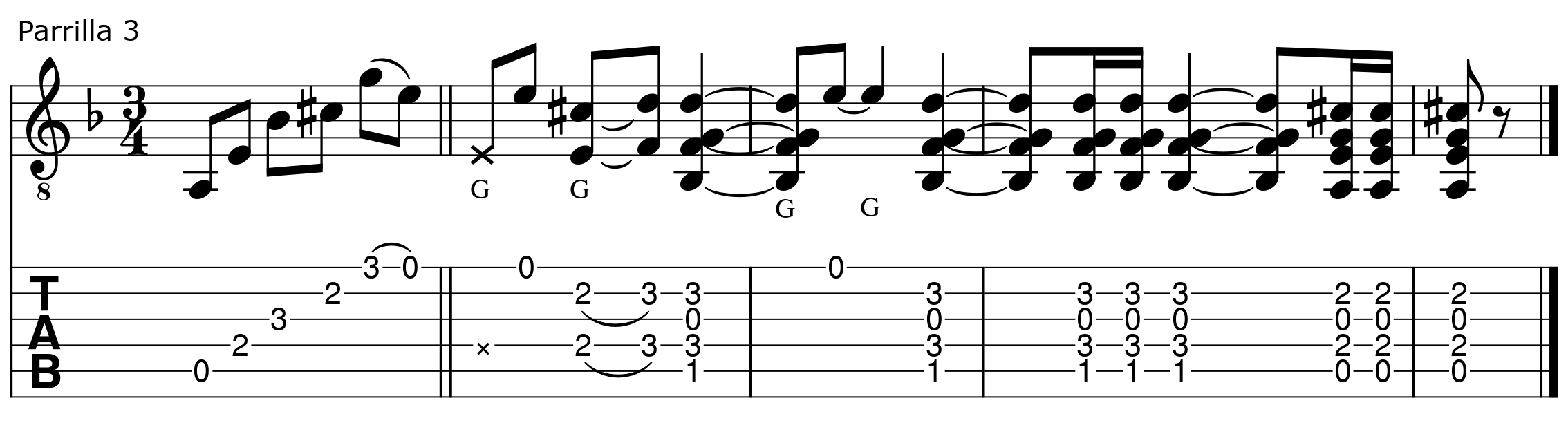
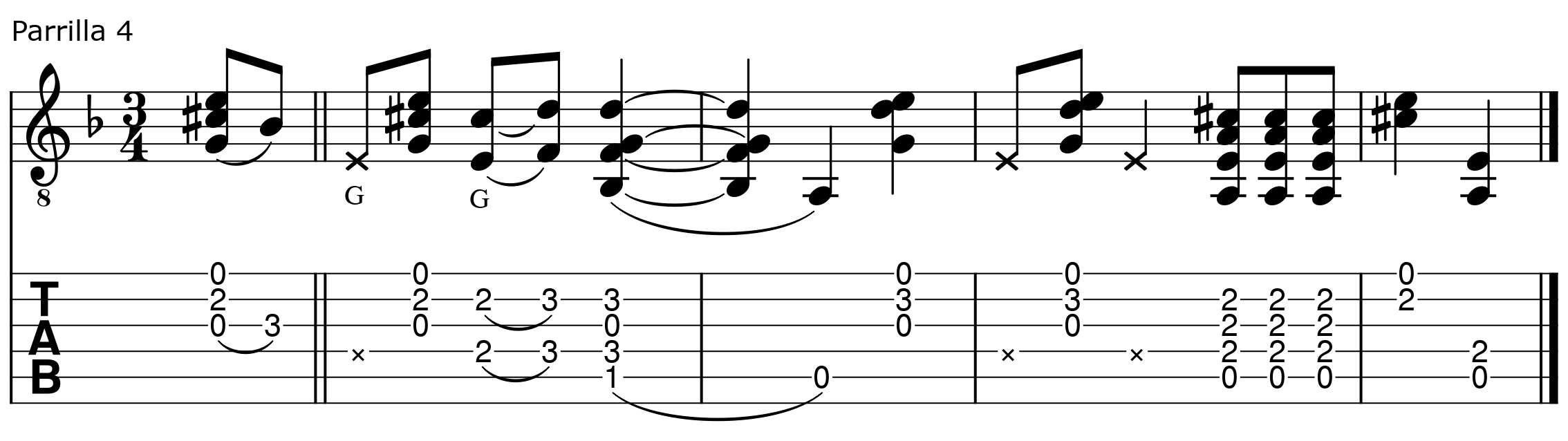
Parrilla 4 slow and fast. In Parrilla 4, he starts the cierre on beat 5.
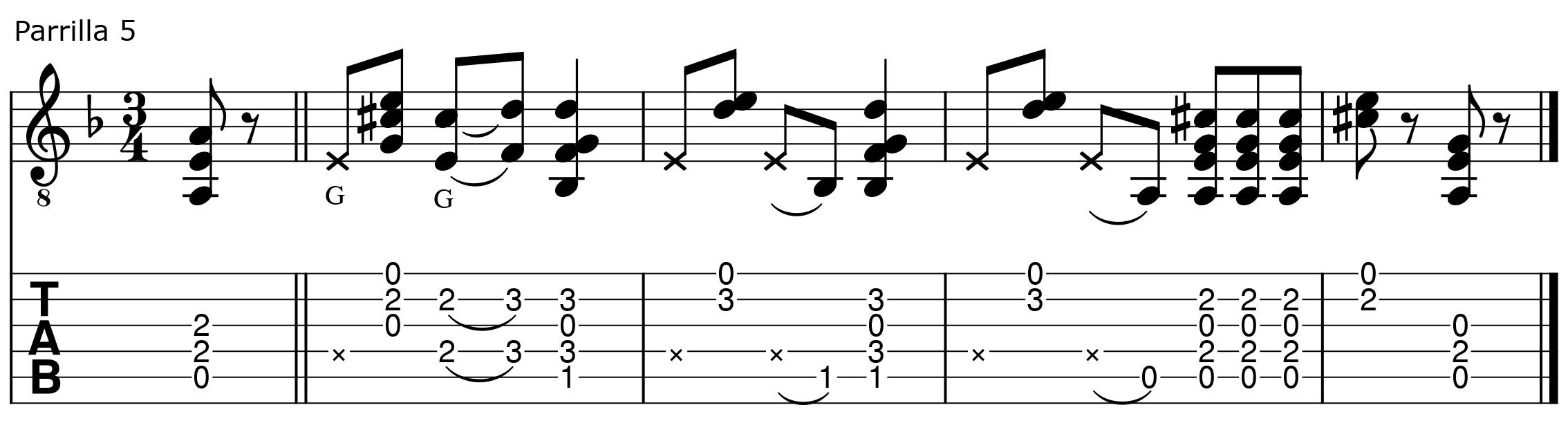
Parrilla 5 slow and fast. Parrilla 5 is comparable to Melchor, Morao 1 and Cepero 1.
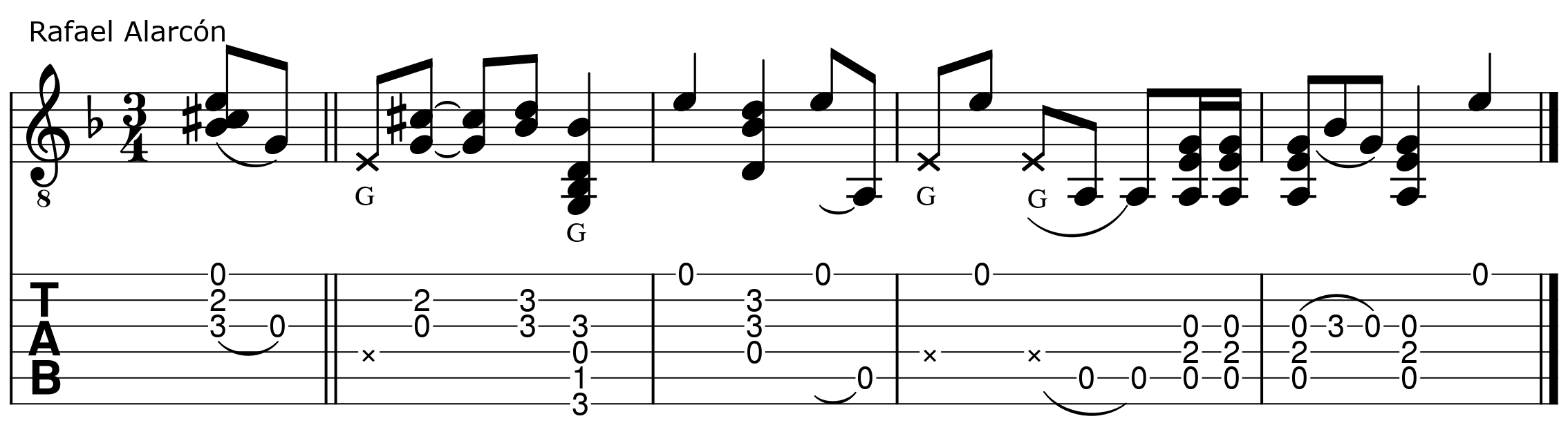
Rafael Alarcón slow and fast. Rafael Alarcón recorded with Agujetas el Viejo in a live performance and with other singers in the 1973 release "Nueva frontera del cante de Jerez." The following example offers another approach to the basic rhythm. After the first tap (beat 1.5), he probably uses an index upstroke, then another upstroke (beat 2.5) and finally a thumbed downstroke (beat 3). At beat 6.5 he slurs on the fifth string, similar to the examples Morao 2, Cepero 1 and Parrilla 1 and 2.